
Uncertainty doesn’t slow organisations down because leaders lack information. It slows them down because they don’t trust it.
In volatile conditions, the cost of a wrong decision feels higher - so hesitation creeps in. Reports are questioned. Assumptions are challenged. Meetings end with requests for “just one more cut of the data.” What looks like caution is often unresolved doubt.
And when uncertainty is high, delayed decisions quickly become a risk.
The organisations that move with confidence in these moments aren’t guessing. They’re operating with timely, trusted insight that reduces friction between seeing what’s happening and deciding what to do next.
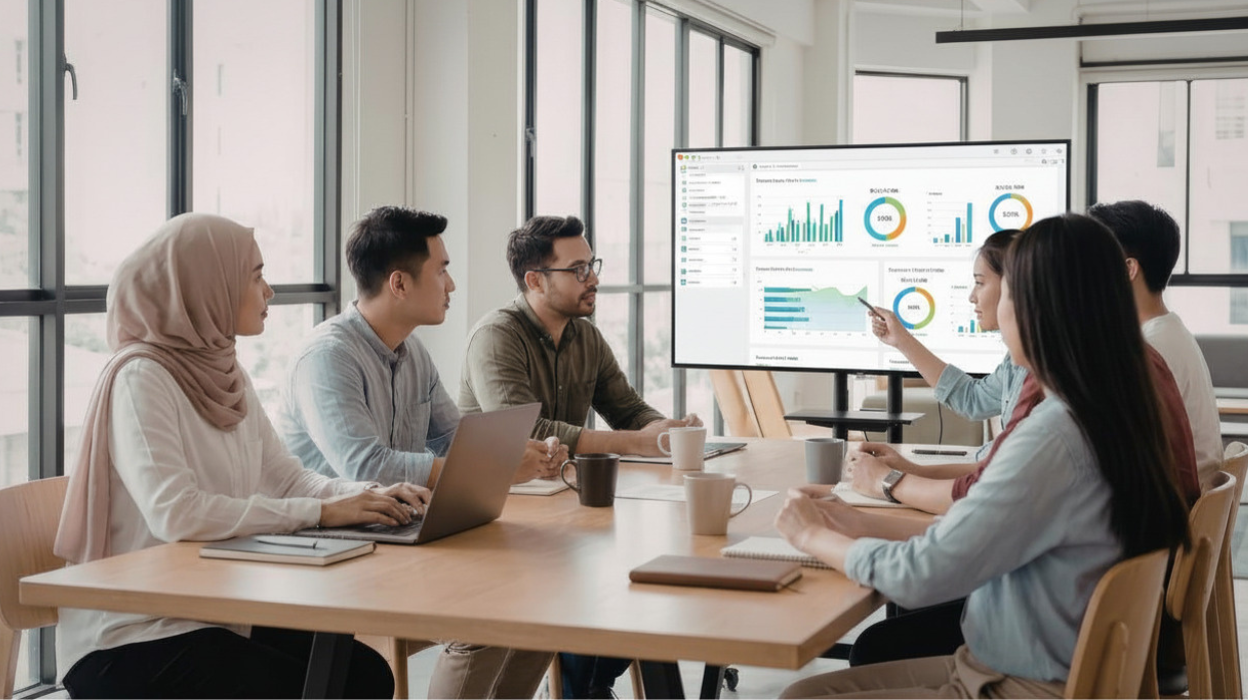
Where hesitation really comes from
When conditions change fast, leadership teams tend to ask the same questions:
- How exposed are we right now?
- What options do we have if things shift again next month?
Answering those questions should be straightforward. In practice, it often isn’t.
Data lives in disconnected systems. Reports are manually assembled. Different teams arrive with different numbers - all technically correct, none fully trusted. By the time the analysis is complete, conditions have already moved on.
This isn’t just inefficient. In an uncertain environment, slow insight actively limits choice. Every extra day spent validating the numbers compresses the window to act.
When organisations can’t trust what they’re seeing, they default to waiting.
From retrospective reporting to decision confidence
What changes this dynamic isn’t more dashboards or more data. It’s confidence - confidence that your information is current, governed, and complete enough to support action.
Modern data and analytics platforms make this shift possible by reducing the distance between events and insight:
- Scenario based planning, not fixed assumptions: Instead of committing to a single forecast and hoping conditions hold, organisations can model multiple scenarios - testing how changes in demand, cost, workforce or regulation play out. Planning becomes an ongoing discipline, not a reaction.
- A single, trusted operational view: When data from finance, operations, workforce and supply chain is unified, leadership sees the same picture at the same time. Conversations move from reconciling numbers to evaluating options. Decisions accelerate because the debate is about what to do, not whether the data is right.
- Earlier signals, clearer choices: AI driven analytics surface patterns and anomalies before they’re obvious - highlighting emerging risks, unusual trends or early opportunities. That earlier warning restores choice, even when the external environment is volatile.
- Faster decisions, less rework: When insight is timely and trusted, executives spend less energy validating inputs and more energy acting. Over time, that speed compounds - particularly when conditions are shifting week to week.
Why data foundations still matter - but differently
None of this works without strong data foundations. But in uncertain times, the value of those foundations isn’t technical - it’s behavioural.
Well governed, real-time data reduces hesitation. It shortens decision cycles. And takes you from reactive to proactive decision making. It allows leaders to move decisively without over relying on instinct or outdated reports.
With technologies like Microsoft Fabric and Azure, organisations can unify data from across the business into a single, governed, AI ready environment fast - enabling real‑time visibility and predictive insight in weeks, not years.
The outcome isn’t just better reporting. It’s decision readiness.
Where Seisma fits
Our focus isn’t experimentation or technology for its own sake. We start with the decisions that need to be made under pressure - then design the data, analytics and AI capabilities that support them.
In the short to mid‑term, we help organisations:
- Establish unified data platforms that provide a single, trusted view across systems.
- Design analytics aligned to specific financial and operational pressures.
- Accelerate AI adoption using use cases grounded in real business priorities.
- Embed governance that sustains confidence as conditions continue to change.
Our strength is translating complex data challenges into practical, business aligned outcomes - so organisations can act with clarity, even when the environment is unpredictable.
The bottom line
Volatility isn’t going away. But paralysis doesn’t have to be the default response.
The organisations that navigate uncertainty best are the ones reducing decision friction now - building the capability to see clearly, test options quickly, and act with confidence before the window closes.
Trusted data. Real time insight. AI grounded in actual operations.
With the right approach and partner, that capability is achievable in weeks.
If critical decisions are being delayed because the numbers can’t be trusted or arrive too late, it’s time to change that.
Ready to reduce decision friction?
Talk to us about our Microsoft Fabric AI Data Foundation offer - designed to deliver a well governed, AI ready analytics platform with real business value from day one.